
NEWS & PRESS · ANALISI DIFESA
Task Force X: Xplora presents its autonomous explosive-threat detection system
Analisi Difesa covers Xplora’s participation in Task Force X Central Mediterranean and an autonomous multisensor system that turns field data into a georeferenced map of explosive threats.
Task Force X and field experimentation
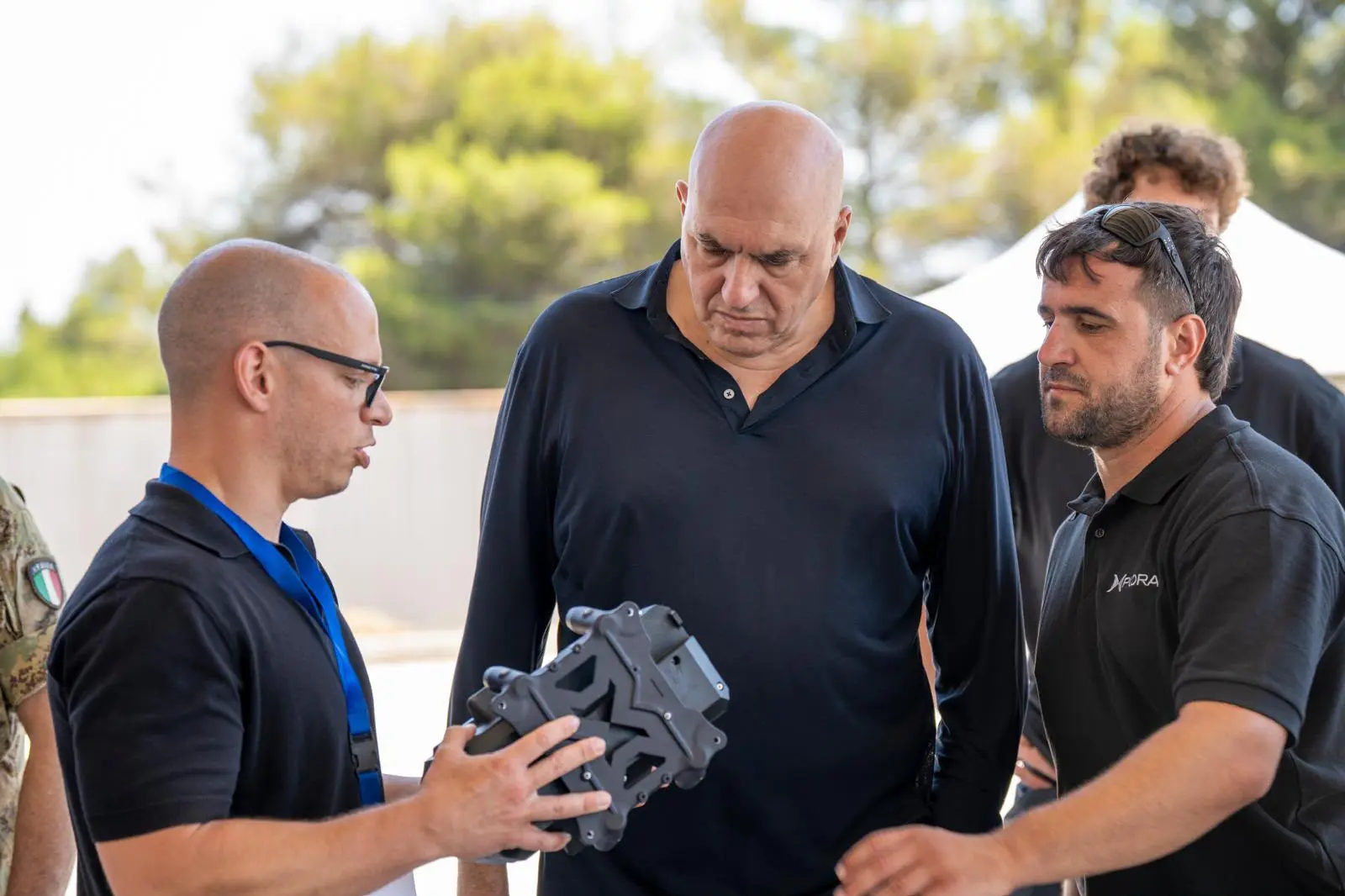
On 10 July 2026, Analisi Difesa published a feature on Xplora’s participation in Task Force X Central Mediterranean. The source describes the initiative as an Italian-led NATO Allied Command Transformation multidomain experiment held in Puglia, where emerging capabilities could be considered alongside real procedures and operational needs. Within that setting, Xplora presented a solution for surveying the surface and subsurface without requiring an operator to be the first person to enter the area under examination.
The report places the demonstration within the wider challenge created by land mines and unexploded ordnance, which can restrict movement, agriculture and a community’s return to normality long after a conflict has ended. The purpose is not to replace the expertise of those responsible for an operation. It is to make structured information about the ground available sooner, so planning can begin from georeferenced evidence rather than relying only on direct reconnaissance.
From sensor signals to an operational map
According to Analisi Difesa, the system combines an autonomously guided platform, sensors for observing surface and subsurface threats, and artificial-intelligence software developed by Xplora. Acquired signals are correlated and converted into a georeferenced representation that can help identify areas requiring further attention and routes that may be traversable. This reflects Xplora’s approach to sensor fusion: bringing different readings together to produce an intelligible output rather than a collection of separate traces that still need to be reconciled in the field.
The operational value lies in the distance created between people and a potential threat. Remote acquisition can reduce initial exposure while leaving assessment and decisions with trained specialists. Xplora’s Defence page presents this logic as part of a broader chain that connects detection, analysis and decision support.
Why this capability matters
The same need runs through military scenarios, clearance work and humanitarian operations: understanding what lies below ground before people move in makes it possible to organise verification and intervention with greater awareness. For Xplora, Task Force X is therefore a point of contact between technology and field use. The value is not autonomy alone, but the ability to provide coherent information to the specialists assessing UXO risk and deciding how an operation should proceed safely.